
Knee Pain Care in Benfleet
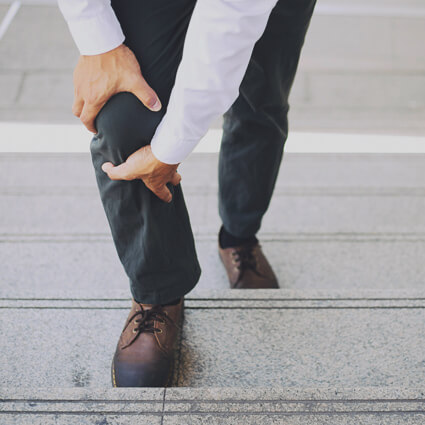 Knee pain can turn stairs, dog walks, and five-a-side football into something you have to think twice about. Many people come in after trying rest or anti-inflammatories, or after imaging has identified changes in the joint, but still have questions about what may be placing strain on the knee.
Why Knee Pain May Need a Closer Look
Knee pain isn’t always just about the knee itself. The way you stand, walk, and distribute your weight can affect how forces travel through the joint. Imaging can provide useful information about changes within the knee, while a biomechanical assessment looks at how other areas may be affecting the way the knee is loaded.
How Problems Above and Below the Knee Can Affect It
The knee sits between the hip and the foot, so what’s happening in either area may influence its mechanics. A few factors outside the knee itself may be part of the picture:
- Collapsed or overpronated arches that encourage the knee to rotate inwards
- Sacroiliac or lower back dysfunction associated with pain felt around the knee
- Uneven hip mechanics that change how the leg moves
- Previous injuries that have altered movement patterns over time
The examination also looks at the knee itself, including movement and rotation, muscle function, kneecap mechanics, and patterns that may be placing additional stress through the joint.
A Full Biomechanical Picture Before Care Begins
At Spinal and Natural Healthcare Centre, your detailed history is completed in advance, leaving more appointment time for the physical examination. Rather than assessing the knee in isolation, the examination considers movement and joint mechanics through areas including the lower back, hip, knee, ankle, and foot.
AI posture screening and biometric testing may provide additional information about posture and how load is distributed through the body. These findings are considered alongside the clinical examination to build a fuller picture of what’s happening.
Depending on the findings, care may include chiropractic care, rehabilitation, soft tissue work, laser therapy, TECAR therapy, or a combination of approaches where appropriate.
Finding the Right Balance With Activity
Getting back to activity doesn’t necessarily mean choosing between complete rest and pushing through pain. If you run, cycle, play football, or train regularly, temporarily modifying how much you do may be part of the plan.
If an activity consistently brings on pain, you may be advised to stop before reaching that point rather than repeatedly pushing through it. Rehabilitation exercises and work at home can also play an important role.
What Progress Can Look Like
There isn’t one recovery timeline for knee pain. For problems that have been present for six weeks or longer, changes may sometimes become noticeable after around four to six weeks of care, although this varies depending on the problem, activity levels, and participation in rehabilitation.
Progress isn’t always a straight line. Feeling better can make it tempting to do too much too soon, which may aggravate symptoms. The aim is to gradually build your capacity for the activities knee pain has been interrupting.
Frequently Asked Questions
Will I need surgery for my knee pain?
Why does my hip or back matter if the pain is in my knee?
Can I keep exercising with knee pain?
Take a Closer Look at Your Knee Pain
When knee pain keeps getting in the way of walks, sport, or everyday movement, a detailed assessment can help build a clearer picture of what may be involved. Get in touch with Spinal and Natural Healthcare Centre to book your assessment with Dr Stuart.
